Mass Timber Part 2: Small Scale, Big Impact
The case for mass timber has been made: mass timber reduces embodied carbon, offers cost-competitive construction, and offers structural and aesthetic advantages [see more in CBT’s Mass Timber Fundamentals piece here!]. The building codes are now catching up, and the industry is seeing explosive growth. Utilization of mass timber on building projects is increasing exponentially as more building-owners take the leap. If you’re curious about mass timber but cautious about the unknowns of using it on a large-scale project, there’s a simple way to get started: start small.
CBT’s latest research explores practical strategies that incorporate mass timber at a small scale. We analyzed two recently completed projects and two projects on the boards that span typologies including academic, religious, commercial, and residential. Mass timber systems, when used efficiently and sourced responsibly, present compelling benefits over conventional steel and concrete. Beyond the significant embodied-carbon reduction achieved, these projects celebrate community-oriented spaces that evoke a sense of belonging, identity, and lifestyle. Each building-owner fully embraced biophilia as design driver. This empowers compelling design solutions, boldly reinforcing connections to nature both by celebrating exposed structural natural wood and extending the impact by emphasizing indoor-outdoor connections. Connection to nature has been directly linked to increased wellbeing, mental health, and cognitive function. Through creative use and exposure of mass timber in areas of maximum impact, each project was able to reap the rewards of timber with minimal cost impacts.
At its core, our analysis found that while carbon savings (and the associated reduced environmental impacts) are a fundamental benefit of mass timber structural systems, the balancing of community benefits and cost was the key driver for decision making and successful implementation. This balancing point varies widely due to unique project needs and constraints. Limiting mass timber to a single floor, using mass timber for a specific portion or wing of a building, and deploying mass timber in conjunction with other structural materials for a hybrid solution are all strategies that were utilized across these projects. These strategies play to both the efficiency of the material itself and the economic integration within the constraints of the project. With each project, we found the ‘sweet spot’: four innovative approaches to incorporate mass timber at small scale for big impact.
Utilizing mass timber on a small building or one portion of a larger project is a great and viable way to maximize impact, reduce risk, and ‘get your foot in the door’ on this innovative and sustainable structural solution.

Academic: St. Paul’s School Fleischner Family Admissions Center
19,000 GSF | 52 cubic meters of wood
From day one, the Fleischner Family Admissions Center, sited at the entrance of the St. Paul’s School, presented a clear mandate. By bringing together shared goals of environmental responsibility, architectural clarity, and community connection, the building is a model for how schools can align mission, community, and environment.
The design intent was to create a space that balances hospitality with discretion. Working jointly with the project team, CBT sought an integrated approach for mass timber systems that balanced benefits and trade-offs, analyzing cost, efficiency, schedule, and both sustainability and biophilia/aesthetics benefits for keeping the mass timber components exposed and visible. Limiting the use of mass timber to the Great Hall, a 100-person gathering and event space, kept costs low while maximizing the benefits to the school community.
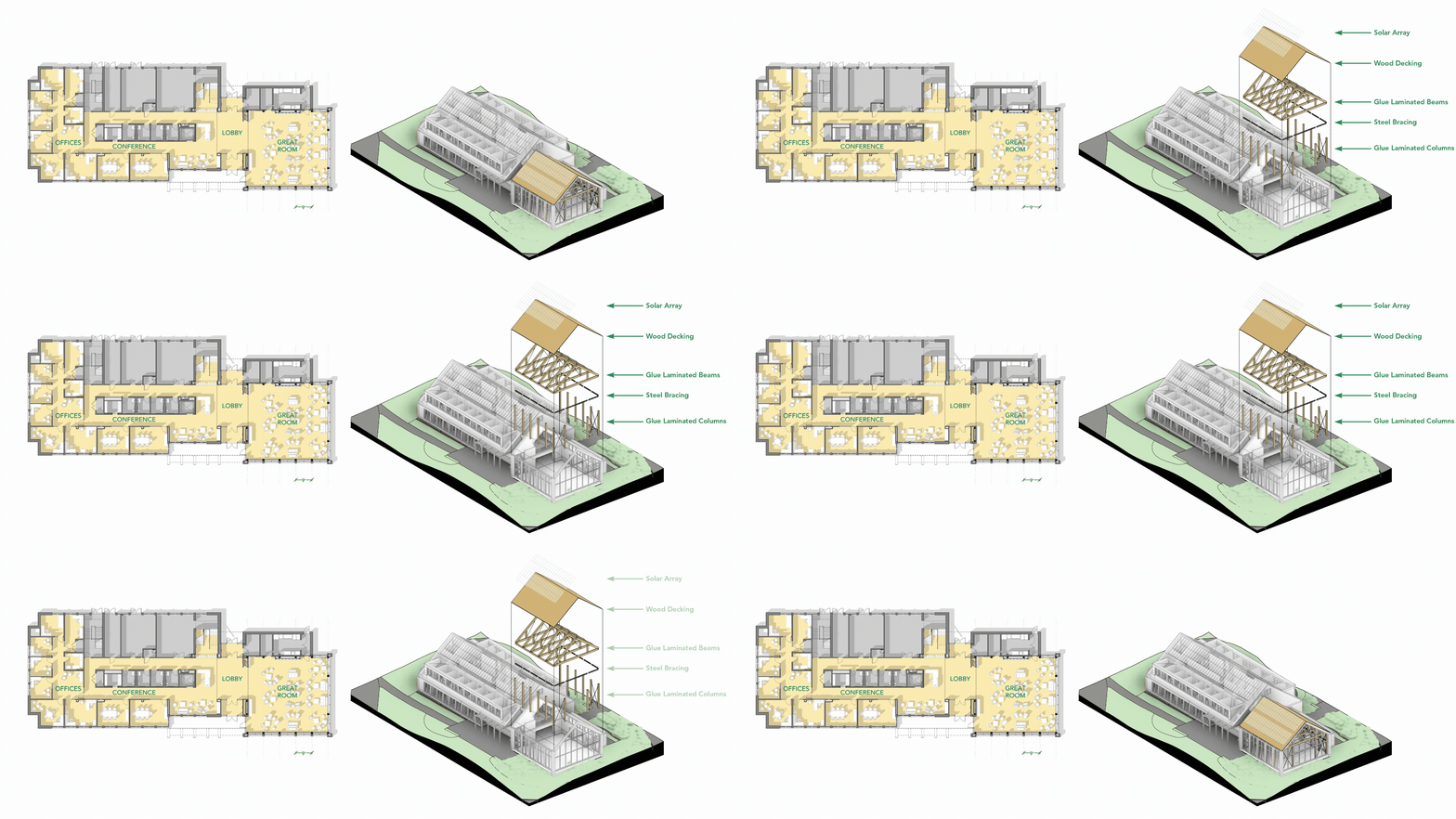
The Great Hall’s mass timber construction reduces embodied carbon and establishes a warm, tactile interior. Glue-Laminated Columns and Beams at 9’ bay spacing, combined with traditional wood decking expresses the structure as the architecture in a simple and elegant manner. The mass timber’s embodied carbon reductions are augmented with myriad sustainability features—from all-electric systems to real-time energy use dashboard—made visible to turn the building itself into a teaching tool.
The success of this project is a result of the transparency and integration among the team which allowed us to both align design solutions with programmatic needs of the building and turn the Great Hall into a celebration of school identity and values via mass timber integration. This project exemplifies collaboration and shared goals which can serve as a model for future school facilities.
Client & Location: St. Paul’s School; Concord, New Hampshire
Project Partners: Rist Frost Shumway Engineering (Structural Engineer), Harvey Construction (General Contractor), South County Post and Beam (Mass Timber)

Religious: University of Massachusetts Amherst, Newman Center
19,000 GSF | 60 cubic meters of wood
The Newman Center serves as a “home away from home” for many students seeking community, purpose, and peace during their college journey. The redesigned Newman Center artfully integrates its two distinct program components, the student hub—spaces to gather, study, eat, and seek support—and the chapel, while also distinguishing these secular and spiritual spaces with tailored design and mass timber system approaches.
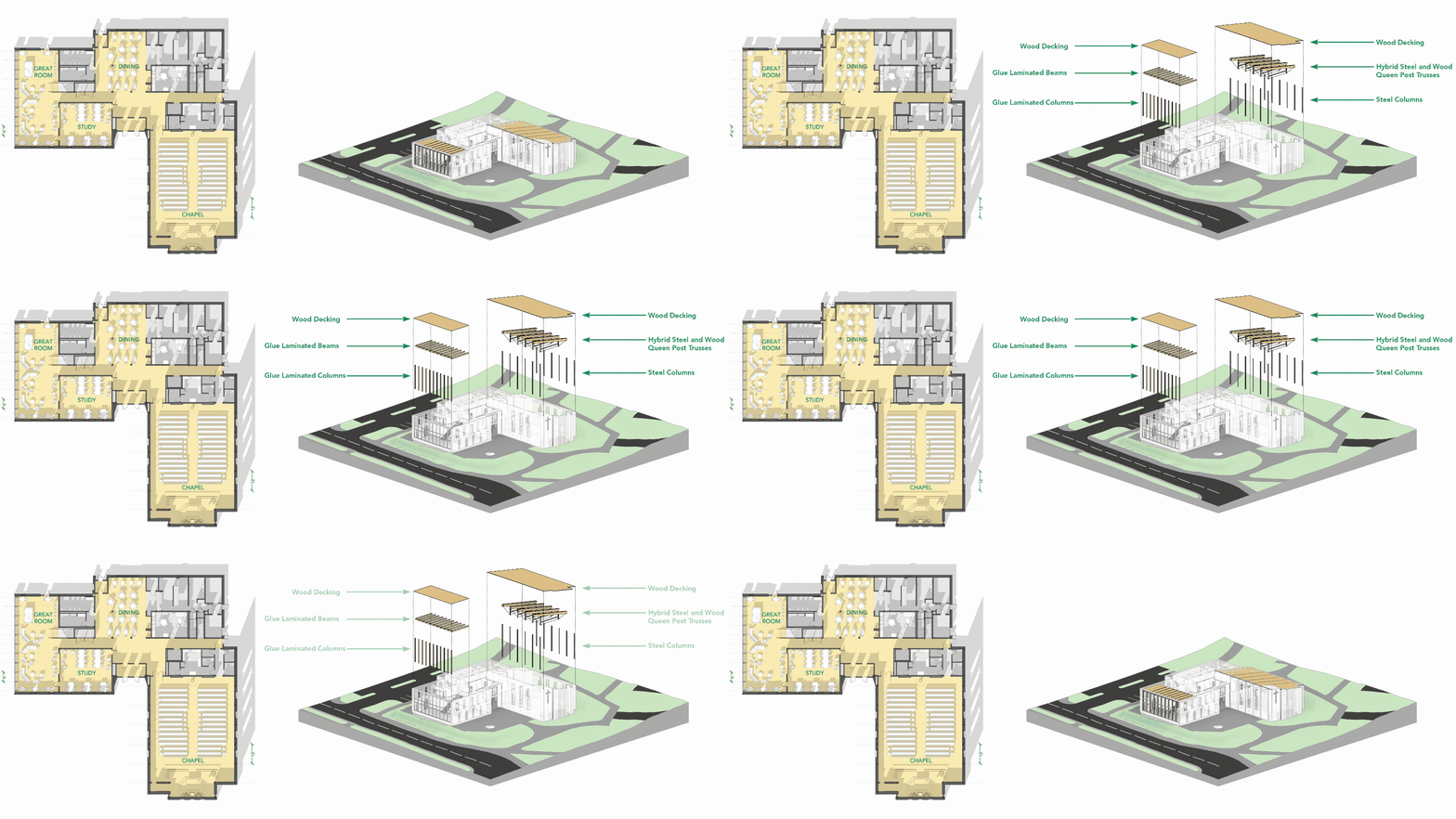
The mass timber design pays homage to the past Chapel’s wood interior while opening up and providing daylight for significant portions of the program to create a welcoming, inviting presence. For each wing, a tailored approach for judicious structural wood structure found that ‘sweet spot’ to maximize value. In the Student Hub, light pours through floor-to-ceiling windows overlooking a lush garden and the campus beyond —visitors feel they might be outdoors. Glue Laminated columns and beams support wood decking, all exposed and feature-lit for a radiant warm aesthetic. The building’s second wing hosts the new chapel. Hybrid steel and wood queen-post trusses turn the chapel ceiling into a subtle yet significant feature. Because the vertical supports were to be concealed in the chapel interior, conventional columns made most sense support the truss assemblies. Limiting the wood to where it has visual and/or tactile impact play to both the efficiency of the material itself and the economical deployment within the constraints of the project budget.
Now the Newman Center, which has been a cultural and religious cornerstone for the Archdiocese of Springfield and UMass Amherst students for over 60 years, is welcoming students to its new artful and sustainable homebase at UMass Amherst’s southeastern gateway.
Client & Location: Archdiocese of Springfield, University of Massachusetts Amherst; Amherst, MA
Project Partners: Rist Frost Shumway Engineering (Structural Engineer), D.A. Sullivan & Sons (General Contractor), Timber Systems (Mass Timber)

Commercial: The Exchange at CityPoint South
20,000 GSF | 418 cubic meters of wood
On the site of a former rock quarry in Greater Boston, CBT planned a future-ready lab and office campus with integrated retail, wellness, and public spaces. Health and wellness though connection to nature are drivers for the overall planning of the multi-building development, with particular emphasis on the Exchange, a centrally-placed multi-story dining, fitness, and wellness center that includes coworking/conferencing space on the upper levels.
Mental health and cognitive function improvements have been directly tied with connection to nature, and researchers have found that more than 90% of people imagine themselves in a natural setting when asked to think of a place where they felt relaxed and calm. Visual and tactile connection to naturally occurring materials such as the exposed wood grain of mass timber assemblies, paired with an openable building envelope, creates a strong link here. The Exchange pavilion utilizes Glue Laminated columns and beams with cross laminated timber (CLT) for its two-story structural assembly and keeps nearly 100% of the timber assemblies exposed, maximizing its impact on the feel of the spaces. Bespoke detailing such as tapering rafter elements, wood-encased skylights, and indoor-to-outdoor CLT soffits bring an added wow factor to the pavilion.
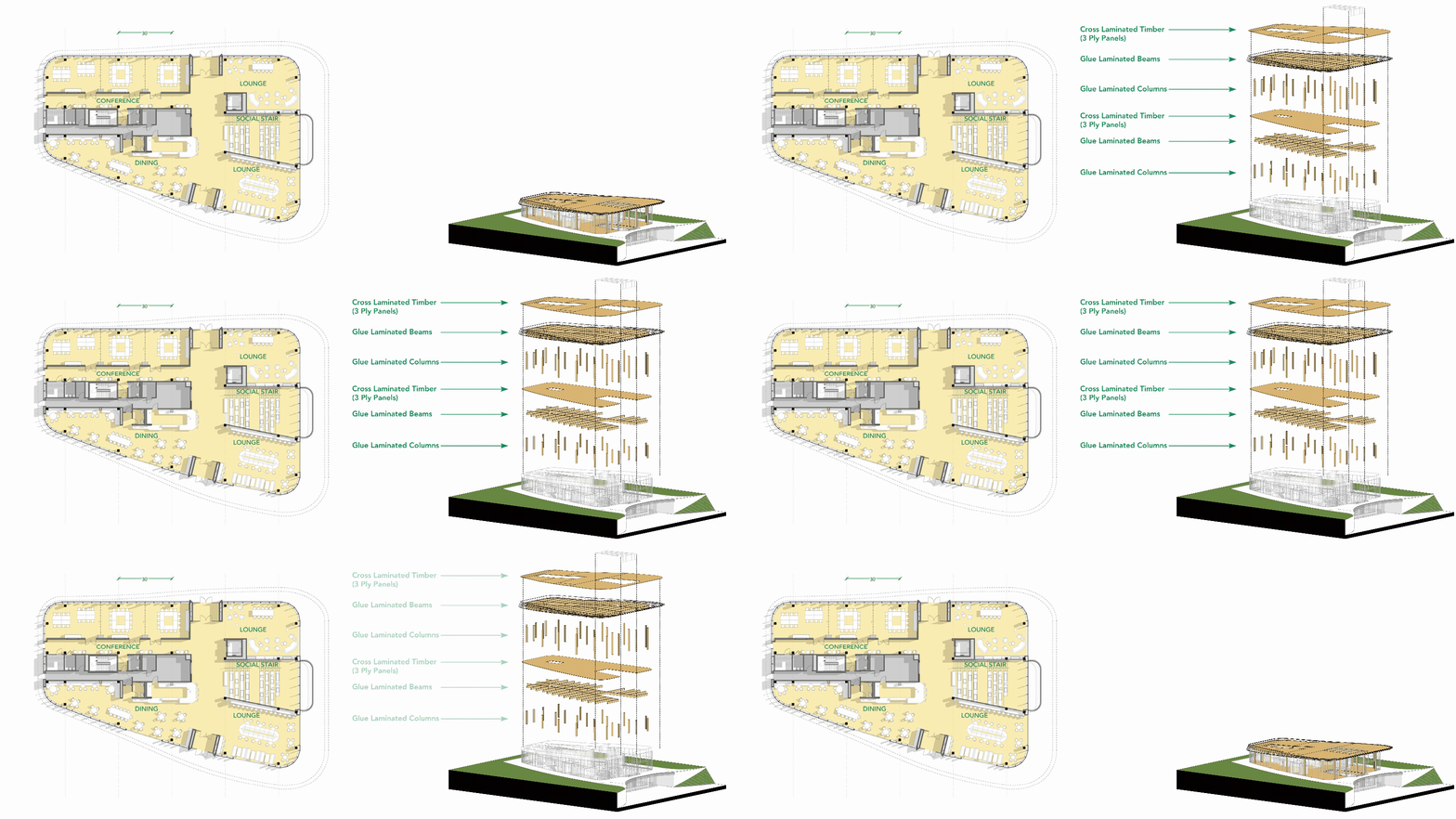
At the Exchange, employees and visitors to the campus will be able to recharge, refuel, and connect in a restful, inviting space. The developer saw the value-add that mass timber brought to the Exchange from the initial pitch and stuck with the fully mass timber structural assembly through the design process despite the nominal first-cost premium that the design and construction team identified in options analysis at detailed phases of the design. By focusing this cost premium on a small, centralized, campus-wide amenity at the Exchange, the greater project and its significant user population will receive outsized benefits for this future investment.
Client & Location: BxP; Waltham (greater Boston), Massachusetts
Project Partners: McNamara Salvia (Structural Engineer), Consigli (General Contractor), Nordic Structures (Mass Timber)

Residential: Clubhouse at Maplewood Graduate Housing 2, Cornell University
11,000 GSF | 84 cubic meters of wood
Could the sustainability and biophilic benefits of mass timber be achieved for lower costs than traditional construction? The Clubhouse at Maplewood Graduate Housing 2 is testing this hypothesis as it moves toward construction. The Clubhouse centralizes wellness and community programs into a pavilion building sited in a multi-building residential community nestled into Ithaca’s rolling hills. When built, the Clubhouse will provide a range of wellness programs and fitness classes and will serve as the new “heart” for a new 800-student off-campus graduate student housing complex. Entirely made of mass timber, the building houses a centralized café commons, fitness, and study areas as well as leasing offices.
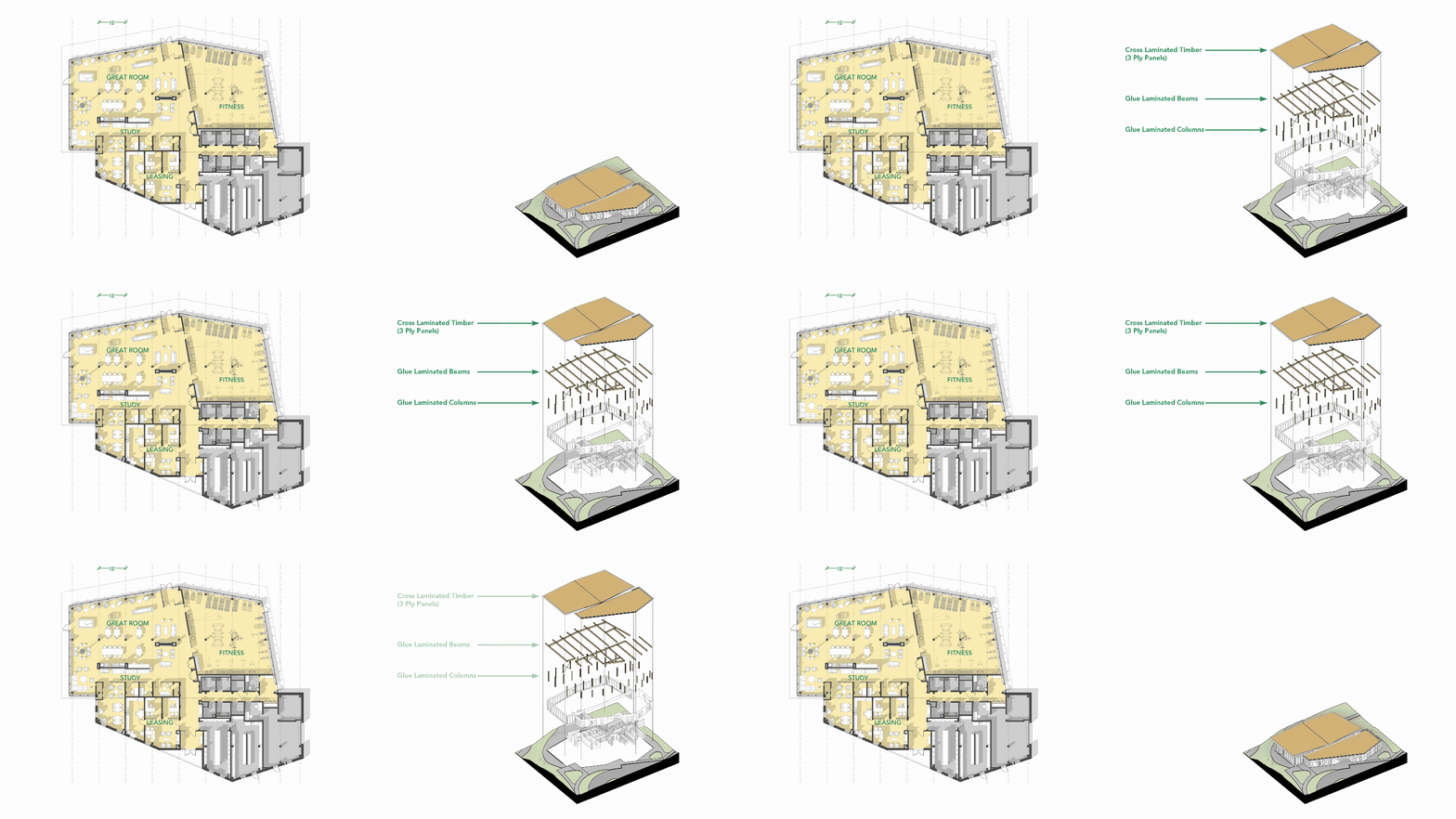
By centralizing the mass timber into this community gathering space, the project consolidates the benefits—the energy and activation from community programming and biophilia advantages from exposed mass timber assemblies—for all residents. By developing the Clubhouse as both single-story Type-5 construction and as mass timber from day one, the design and detailing could be tailored to maximize material economies of the Glue Laminated columns and beams and CLT mass timber assemblies. As due diligence, the design and construction team analyzed both conventional steel and mass timber structural options. At each design milestone, we have found that costs will be comparable with mass timber. In fact, at one point during pricing the mass timber came in cheaper than steel.
Client & Location: Greystar, Cornell University (public-private partnership); Ithaca, New York
Project Partners: Thornton Tomasetti (Structural Engineer), Greystar (Developer & General Contractor)
Community, Carbon, and Cost: Finding the Right Balance
For these four projects, CBT carefully calibrated the use of mass timber to align with individual project priorities, cost constraints, and material efficiencies. Embodied carbon reduction and sustainability were not the primary driver for all the projects and were not the sole consideration for any individual project. Despite this, and despite their small scale, the reduction in embodied carbon reduction that each project achieves is substantial:

We’re grateful to our partners and clients both locally and nationally for their collaboration in advancing this work. The need for a champion on each leg of the project team—ownership, design, and contractor—repeatedly demonstrated its value and was critical for these projects’ successful use of mass timber. Newer technologies need a champion, and these projects are part of the vanguard to familiarize and de-risk mass timber as a project solution to the industry more broadly. In a future post, we will share some of our research, completed in partnership with WoodWorks and the City of Boston Mass Timber Accelerator Grant program, for larger high-rise mass Timber applications that integrate these technologies at scale.
Henry Weinberg, AIA, LEED AP BD+C is an Associate Principal at CBT in Boston and leads the firm’s strategic initiatives in housing, academic environments, sustainable design, and driving innovation across these sectors. If you are interested in furthering the conversation, please contact him at weinberg@cbtarchitects.com
Laura Rushfeldt, AIA, LEED AP is an Associate Principal at CBT whose work focuses on the planning and programming for complex cultural and commercial projects that seek to improve urban life, from resiliency to equitable human experience.